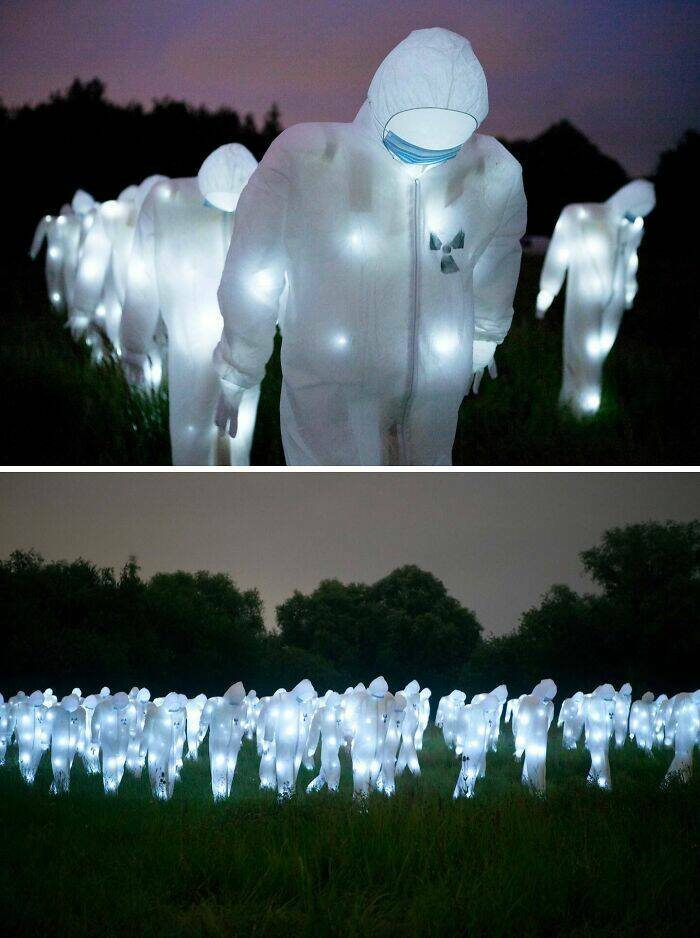
"After the devastating earthquake and tsunami in 2011, when the Fukushima nuclear power plant was on the verge of collapse, a small group of people stepped forward – not soldiers, not politicians, but courageous technicians, engineers, and scientists. Many of them were already retired. They volunteered to stay where few wanted to stay: inside the danger.With destroyed cooling systems and radiation levels thousands of times higher than the legal limit, these men and women risked their lives to prevent the worst. They became known worldwide as the "Fukushima 50."Equipped with protective suits, they took on tasks no machine could do – pumping seawater into overheated reactors and working amidst the rubble. They knew what was at stake: not just their health, but the fate of an entire country.What they did was not heroism in the traditional sense. It was quiet courage, deep responsibility, and the will not to look away in the darkest hour. Many of them didn't want recognition—only the hope that their efforts would save lives and prevent the unimaginable. Their courage will never be forgotten."



It is common usage in English to refer to it as a baby, even in utero. Just ask your mother. But you do bring up an important question, when is it a baby? Dont say "at birth", my son's best friend was born at 28 weeks in an emergency c section because of a car accident. He is a good kid and no less of a person because he wasn't born at 40 weeks.


Sheldon Cooper companion.


#42 *drown
It is common usage in English to refer to it as a baby, even in utero. Just ask your mother. But you do bring up an important question, when is it a baby? Dont say "at birth", my son's best friend was born at 28 weeks in an emergency c section because of a car accident. He is a good kid and no less of a person because he wasn't born at 40 weeks.
Sheldon Cooper companion.
#42 *drown