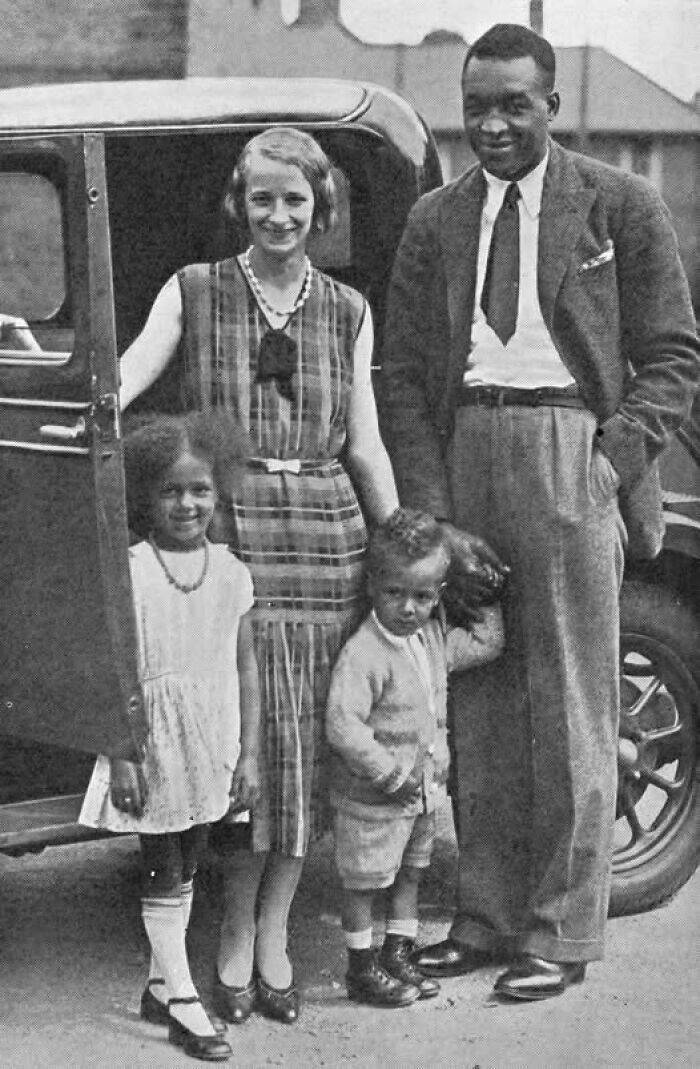
"In the 1930s, Larry Gains, a prominent Canadian heavyweight boxing champion, is seen alongside his family in a heartwarming family portrait. Known for his remarkable athleticism and success in the boxing ring, Gains was a trailblazer for Black athletes in Canada and a role model for many aspiring boxers. His career was marked by determination and skill, and he became a symbol of perseverance in a sport that was often challenging for African Canadians to break into during that era.Gains’ family, featured in this photo, likely played a crucial role in his success, offering support and stability throughout his career. The image highlights not only the personal side of a sports icon but also the strong family bond that helped him through the ups and downs of his athletic journey. Family portraits like this one remind us that behind every public figure is a network of loved ones who contribute to their achievements.As a boxer, Gains fought during a time when racial discrimination was still prevalent, making his accomplishments even more significant. While the 1930s saw a rising awareness of racial inequality in many facets of society, Gains’ success in the ring helped to challenge stereotypes and break barriers for future Black athletes. His family’s presence in this photo serves as a reminder of the sacrifices and dedication that helped him achieve greatness in the world of boxing."



It is common usage in English to refer to it as a baby, even in utero. Just ask your mother. But you do bring up an important question, when is it a baby? Dont say "at birth", my son's best friend was born at 28 weeks in an emergency c section because of a car accident. He is a good kid and no less of a person because he wasn't born at 40 weeks.


Sheldon Cooper companion.


#42 *drown
It is common usage in English to refer to it as a baby, even in utero. Just ask your mother. But you do bring up an important question, when is it a baby? Dont say "at birth", my son's best friend was born at 28 weeks in an emergency c section because of a car accident. He is a good kid and no less of a person because he wasn't born at 40 weeks.
Sheldon Cooper companion.
#42 *drown