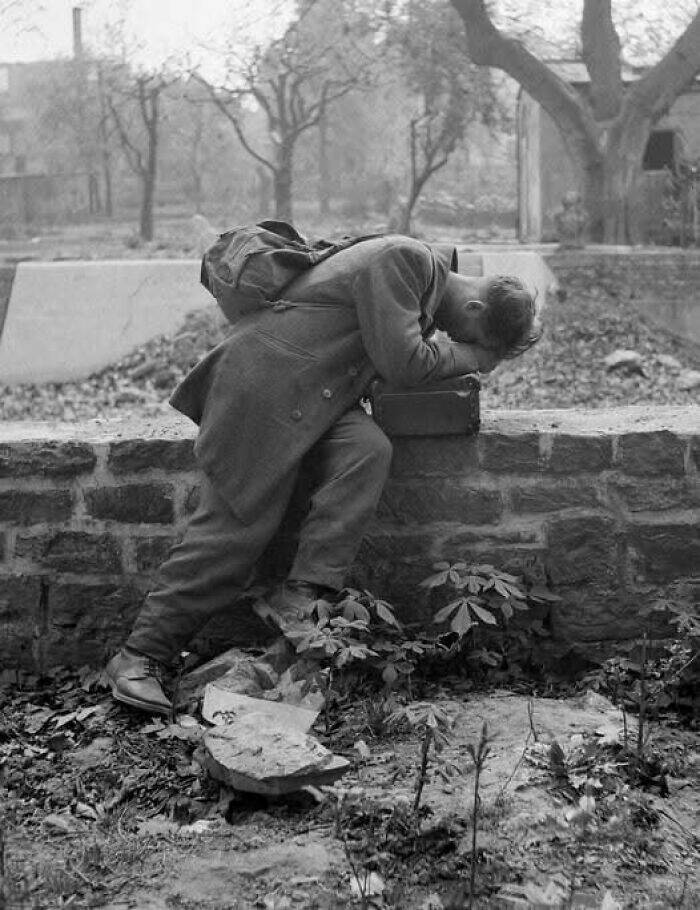
"In 1947, a defeated German soldier returned home to Frankfurt after the end of World War II, only to find his once-familiar surroundings reduced to rubble. The devastation of the war had torn apart not just the city but his own personal life. His home, once a place of comfort and security, was now a pile of debris, a stark reminder of the destruction that had swept across Europe during the war years.As he stood amidst the ruins, the soldier's heart sank as he realized that his family was gone. His wife and children, who he had hoped to return to, were no longer there. The uncertainty of their fate left him with a deep sense of loss and grief, compounded by the isolation and despair of post-war Germany. Many families had been separated or torn apart by the war, and for this soldier, the hope of reunion was now a painful memory.The emotional and physical scars of war were everywhere in Frankfurt and across Germany at the time. People returned to find their homes destroyed, their loved ones lost, and their world upended. For the soldier, like many others, the journey home was not one of joy but of profound sorrow and the harsh reality of rebuilding a life from the ashes of a world that had been forever changed."




It is common usage in English to refer to it as a baby, even in utero. Just ask your mother. But you do bring up an important question, when is it a baby? Dont say "at birth", my son's best friend was born at 28 weeks in an emergency c section because of a car accident. He is a good kid and no less of a person because he wasn't born at 40 weeks.


Sheldon Cooper companion.


#42 *drown
It is common usage in English to refer to it as a baby, even in utero. Just ask your mother. But you do bring up an important question, when is it a baby? Dont say "at birth", my son's best friend was born at 28 weeks in an emergency c section because of a car accident. He is a good kid and no less of a person because he wasn't born at 40 weeks.
Sheldon Cooper companion.
#42 *drown