The Gobekli Tepe Might Be The World's Oldest Temple
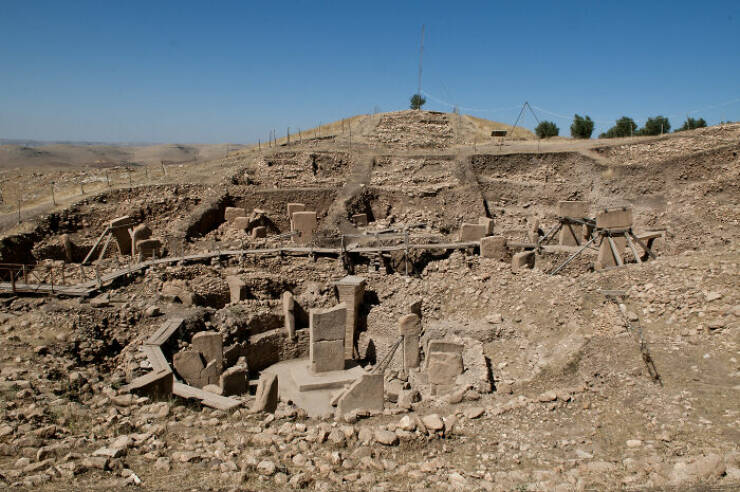
Challenging established timelines for human settlement, the Gobekli Tepe, believed to be the world's oldest temple, predates the previously accepted start of permanent city-building by over a thousand years. This remarkable structure, built more than 11,000 years ago, suggests that humans were constructing significant, permanent settlements much earlier than paleontologists had traditionally thought. The existence of these ruins forces a re-evaluation of when and why early humans began to establish fixed communities.
2

1.

Philinda 1 year ago
#1 while Rome did (accidentally) burn part of the library, so did invading Muslim forces. It burned several times, some long after the budget cuts listed, showing that the thing was around despite money problems.
1
2.

Adele 1 year ago
Philinda,
when the Muslim invaders arrived, the library was long gone.
when the Muslim invaders arrived, the library was long gone.
-3
3.

Jacqueline 1 year ago
#17 It's always baffling that there are people spending their live on researching excrements
0
4.

Cilla 1 year ago
Jacqueline, Excrement can hold a lot of scientific, medical, and sociological information. When I was young, it was still common for a doctor to ask how a patient's digestion was, because it could reveal so much about so many medical questions. That doesn't happen anymore, and I can tell you from a life time of experience that many, many people end up with terminal illnesses because they have not had a healthy bowel movement in years, so their bodies have become toxic. Similarly, excrement can tell scientists how ancient peoples lived, what they ate, what their social standing was, how their health was, etc.
3
5.

Louise 1 year ago
#3 Not to be confused with the 'Higgs Boson.' 
2
6.

Dorinda 1 year ago
#4 And black race-grifting professional victims absolutely HATE this fact.
2
7.
Adele 1 year ago
Dorinda,
making up an argument again?
making up an argument again?
3
8.

Adele 1 year ago
#21 that's wrong. They've been three different tests and they range between 1200 ad and 1300 ad. The Catholic church doesn't even claim it's a relic anymore.
when the Muslim invaders arrived, the library was long gone.
making up an argument again?