The Ambassadors, Hans Holbein The Younger (1553)
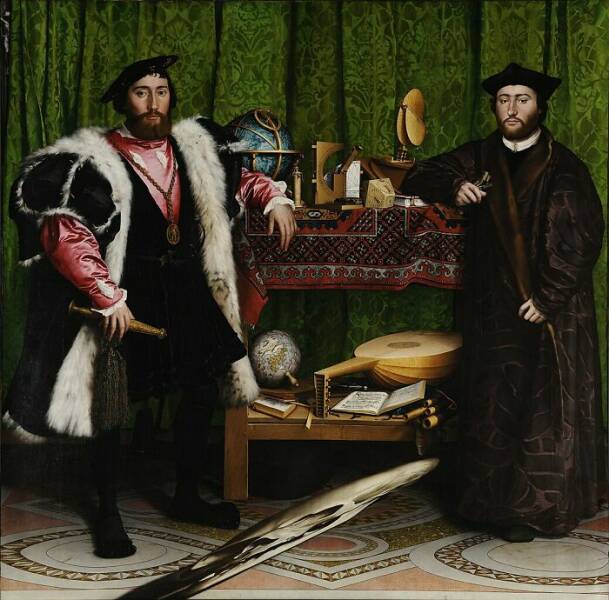
This 16th-century painting depicting French ambassador Jean de Dinteville and Catholic Bishop Georges de Selve isn’t just a double portrait; it’s also a still life masterpiece. What makes the artwork particularly special is that all the objects used in it carry meaning and have been the subject of debate for centuries.
11

1.

Kimberly 12 month s ago
more please
2
2.

Brenda 12 month s ago
#15 All this and you did not mention the skull in the floor. The real reason this painting is famous .
0
3.
Celeste 11 month s ago
#7 It is the depiction of their wedding, wich happend to be in Brügge. A medieval onlooker would see a lot of information in the details:
- The dog stands for loyalty
- The glass windows and the peaches on the windowsill stand for wealth
- the weird wood shoes are called Trippe and saveguard its wearer before the feces on the streets.
- Its a marriage to the 'Left Hand' (her left in his right), means she is from lower social origin
- He raises his right hand for the marriage oath
- The weird Mirror is called 'Hexe' (witch) and if you look closely you will find two persons entring the room. One of them is the painter himself.
- The writing above says 'Jannis van Eyck fuit hic', means Jan van Eyck was here.
Conclusion: The Painting is merely a document of a marriage.

- The dog stands for loyalty
- The glass windows and the peaches on the windowsill stand for wealth
- the weird wood shoes are called Trippe and saveguard its wearer before the feces on the streets.
- Its a marriage to the 'Left Hand' (her left in his right), means she is from lower social origin
- He raises his right hand for the marriage oath
- The weird Mirror is called 'Hexe' (witch) and if you look closely you will find two persons entring the room. One of them is the painter himself.
- The writing above says 'Jannis van Eyck fuit hic', means Jan van Eyck was here.
Conclusion: The Painting is merely a document of a marriage.
0
4.
Celeste 11 month s ago
Celeste,
I mean her right in his left Hand. Sorry.
I mean her right in his left Hand. Sorry.
- The dog stands for loyalty
- The glass windows and the peaches on the windowsill stand for wealth
- the weird wood shoes are called Trippe and saveguard its wearer before the feces on the streets.
- Its a marriage to the 'Left Hand' (her left in his right), means she is from lower social origin
- He raises his right hand for the marriage oath
- The weird Mirror is called 'Hexe' (witch) and if you look closely you will find two persons entring the room. One of them is the painter himself.
- The writing above says 'Jannis van Eyck fuit hic', means Jan van Eyck was here.
Conclusion: The Painting is merely a document of a marriage.
I mean her right in his left Hand. Sorry.