A Sunday Afternoon On The Island Of La Grande Jatte, Georges Seurat (1884)
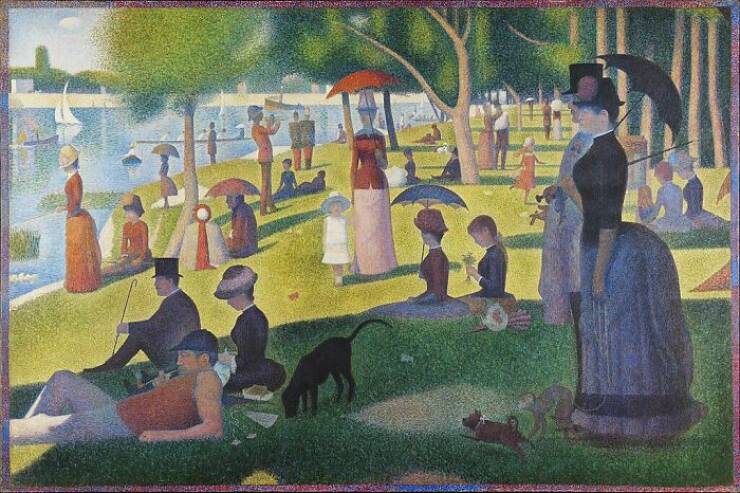
Considered one of the earliest examples of Pointillism, this 19th-century painting by Georges Seurat initially received mixed reviews, but has now become a symbol of the neo-impressionist movement. Despite being incredibly disciplined in his personal life, Seurat pushed boundaries and forever changed the history of art with his rebellious techniques. This painting is now celebrated as a masterpiece, along with many of his others that were created using tiny dots or strokes of pure color.
11

1.

Kimberly 12 month s ago
more please
2
2.

Brenda 12 month s ago
#15 All this and you did not mention the skull in the floor. The real reason this painting is famous .
0
3.
Celeste 11 month s ago
#7 It is the depiction of their wedding, wich happend to be in Brügge. A medieval onlooker would see a lot of information in the details:
- The dog stands for loyalty
- The glass windows and the peaches on the windowsill stand for wealth
- the weird wood shoes are called Trippe and saveguard its wearer before the feces on the streets.
- Its a marriage to the 'Left Hand' (her left in his right), means she is from lower social origin
- He raises his right hand for the marriage oath
- The weird Mirror is called 'Hexe' (witch) and if you look closely you will find two persons entring the room. One of them is the painter himself.
- The writing above says 'Jannis van Eyck fuit hic', means Jan van Eyck was here.
Conclusion: The Painting is merely a document of a marriage.

- The dog stands for loyalty
- The glass windows and the peaches on the windowsill stand for wealth
- the weird wood shoes are called Trippe and saveguard its wearer before the feces on the streets.
- Its a marriage to the 'Left Hand' (her left in his right), means she is from lower social origin
- He raises his right hand for the marriage oath
- The weird Mirror is called 'Hexe' (witch) and if you look closely you will find two persons entring the room. One of them is the painter himself.
- The writing above says 'Jannis van Eyck fuit hic', means Jan van Eyck was here.
Conclusion: The Painting is merely a document of a marriage.
0
4.
Celeste 11 month s ago
Celeste,
I mean her right in his left Hand. Sorry.
I mean her right in his left Hand. Sorry.
- The dog stands for loyalty
- The glass windows and the peaches on the windowsill stand for wealth
- the weird wood shoes are called Trippe and saveguard its wearer before the feces on the streets.
- Its a marriage to the 'Left Hand' (her left in his right), means she is from lower social origin
- He raises his right hand for the marriage oath
- The weird Mirror is called 'Hexe' (witch) and if you look closely you will find two persons entring the room. One of them is the painter himself.
- The writing above says 'Jannis van Eyck fuit hic', means Jan van Eyck was here.
Conclusion: The Painting is merely a document of a marriage.
I mean her right in his left Hand. Sorry.