Payout Frequency vs. Payout Size
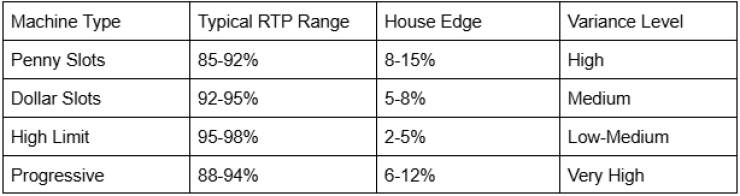
Slot machines balance payout frequency against payout size through mathematical modeling. High-frequency machines offer more regular small wins, while low-frequency slots provide larger but less frequent payouts. This relationship directly correlates with volatility ratings.
Players often misinterpret frequent small wins as indicators of machine looseness. However, these frequent payouts typically return less than the original wager, creating an illusion of winning while gradually depleting bankrolls.
Debunking Strategy Myths with Statistical Evidence
Some players attempt to apply betting progression systems like Martingale to slot play, doubling bets after losses. This strategy fails because slot outcomes remain independent and betting limits prevent infinite progression. Additionally, the house edge applies to every spin regardless of bet size.
Statistical analysis demonstrates that no betting system can overcome the mathematical house advantage built into slot machines. Progressive betting strategies may extend playing time but cannot improve long-term expected returns.
Maximum Bet Requirements for Jackpots
While some older machines required maximum bets for jackpot eligibility, modern slots typically scale jackpots proportionally to bet size. Players can qualify for top prizes regardless of bet amount, though the prize value adjusts accordingly.
This proportional system ensures fair play across all betting levels while maintaining the mathematical integrity of the game. Maximum bet myths persist from earlier mechanical machines that operated under different rules.