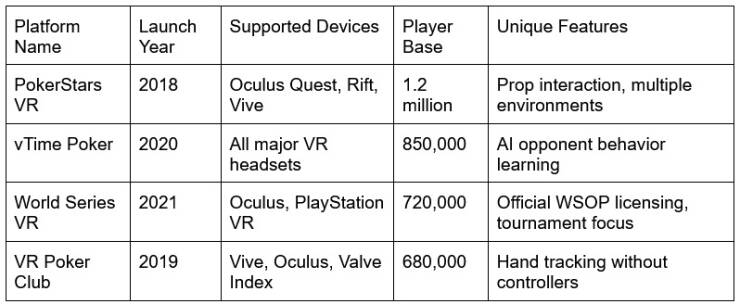
These platforms continue to innovate with features like real-time physiological response tracking and advanced AI opponents that adapt to individual player styles.
Economic Impact and Market Transformation
The economic implications of VR poker extend beyond just gaming entertainment. This technology has created new revenue streams and business models within the online gambling industry. For example:
- Virtual item economies where players can purchase customization options
- Subscription-based access to premium environments and tournaments
- New advertising opportunities within immersive environments
- Reduced operational costs compared to physical casinos
The average VR poker player spends 43% more time on the platform compared to traditional online poker users, according to a 2022 industry report. Additionally, monetization rates are approximately 28% higher, with players more willing to invest in immersive experiences.
Competitive Tournaments in Virtual Reality
Tournament poker has found a particularly strong application in VR, with major events now featuring substantial prize pools. The 2023 VR Poker Championship awarded $1.2 million in prizes, attracting over 10,000 participants from 52 countries. These tournaments benefit from the combination of global accessibility with the excitement of in-person competition.
Challenges and Future Developments
Despite its rapid growth, VR poker faces several challenges:
- Hardware costs remain a barrier to entry for many potential players
- Technical issues like battery life limitations affect extended play sessions
- Regulatory frameworks for VR gambling vary significantly across jurisdictions
- Concerns about addiction may increase with more immersive experiences
Looking ahead, several developments are likely to shape the future of VR poker:
- Integration with blockchain technology for transparent card shuffling and dealing
- Advanced haptic gloves providing more realistic chip and card handling
- Augmented reality options that blend physical and virtual elements
- AI opponents with increasingly sophisticated behavior patterns
Future of Card Games in Virtual Space
VR poker represents more than just a technological upgrade to online card games—it fundamentally transforms the experience by reintroducing the human elements that make poker compelling while maintaining the convenience of digital platforms. As VR technology becomes more affordable and widespread, with headset prices decreasing by an average of 15% annually, we can expect this segment of online gaming to continue its rapid expansion.
For players, developers, and the gambling industry as a whole, VR poker offers new possibilities that were unimaginable just a decade ago. The combination of sensory immersion, social interaction, and convenience creates an experience that may eventually rival or surpass traditional poker in popularity, especially among younger demographics who grew up in the digital age.