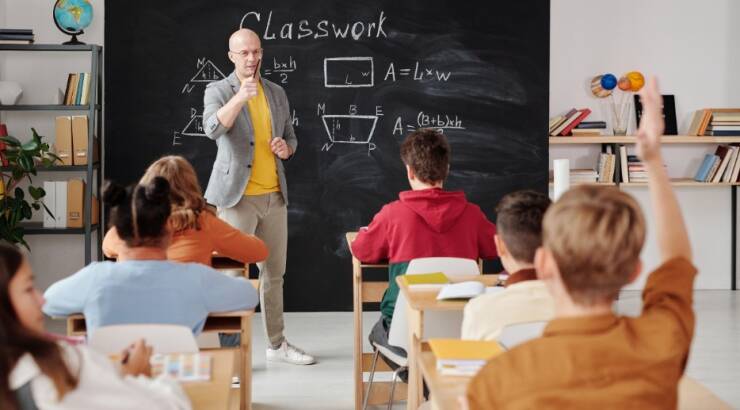
What Makes Sound-Based Feedback More Effective Than Words
Auditory signals are processed quickly by the brain. A familiar tone or sound can trigger a response faster than a spoken sentence, especially when students are already focused on a task. This non-disruptive feedback supports flow-state learning by letting students stay immersed while still receiving cues from the teacher.
Unlike verbal corrections, which can sometimes feel personal, sound feedback feels neutral yet clear. A chime becomes a classroom-wide symbol of encouragement or correction, removing the emotional weight while preserving the message.
Why Sound Buttons Support Positive Reinforcement
Instant sound feedback creates positive behavior loops in the classroom. When students hear a fun, affirmative sound after participating or giving a correct answer, it builds motivation and confidence. It also creates a sense of gamification, where students become eager to engage just to hear the tone.
This approach works especially well in early grades where children are still learning to associate input with outcome. Instead of waiting to be told “good job,” they learn to connect actions with outcomes through immediate sound responses.
When to Use Sound Buttons for Best Impact
Timing is everything. The best time to use a sound button is during transitions, student participation, group activities, or any moment where clear, consistent cues are needed. Overuse can make sounds lose their meaning, but strategic use makes them powerful.
By pairing sounds with certain behaviors, such as staying on task, raising hands, or completing worksheets, students begin to associate those sounds with classroom expectations. The result is smoother management, less need for verbal correction, and a more independent group of learners.
Supporting Special Education and Diverse Learning Needs
Sound buttons are especially valuable in classrooms with neurodiverse learners or students with attention or sensory processing differences. These students often respond better to non-verbal signals than to traditional redirection methods.
Because sound buttons are predictable and neutral, they provide structure and clarity without overpowering the child. A calm chime may work better than repeated verbal reminders for students with auditory sensitivity, while others may benefit from distinct tones that signal praise without overstimulation.
Creating a Feedback-Rich Environment
When sound becomes a regular part of the classroom routine, it turns the entire space into a feedback-friendly environment. Students expect cues, listen for them, and respond more quickly, freeing up the teacher to focus on instruction rather than discipline.
Sound buttons help maintain a rhythm and energy level in class. Whether it’s alerting students to rotate groups or reinforcing classroom rules, the sounds serve as low-effort but high-impact signals that keep everyone on the same page.
Conclusion
Sound buttons offer teachers a fast, flexible way to give students feedback exactly when it matters most. With a simple press, educators can affirm effort, redirect behavior, or guide focus, all without disrupting the flow of a lesson.
These auditory cues support learning, classroom management, and emotional development in one small but powerful tool. Whether used for individual response or group instruction, sound buttons create a more responsive, engaging classroom that runs on rhythm, clarity, and connection.




Very interesting read. Memes are a fun part of online culture, and this memes download site has plenty to enjoy.








Really helpful content. I like how this school calendar is easy to read and includes all the important dates in one place. It’s a great planning tool for families.


Very interesting read. Memes are a fun part of online culture, and this memes download site has plenty to enjoy.
Really helpful content. I like how this school calendar is easy to read and includes all the important dates in one place. It’s a great planning tool for families.