Pay attention to the fingers and the eyes
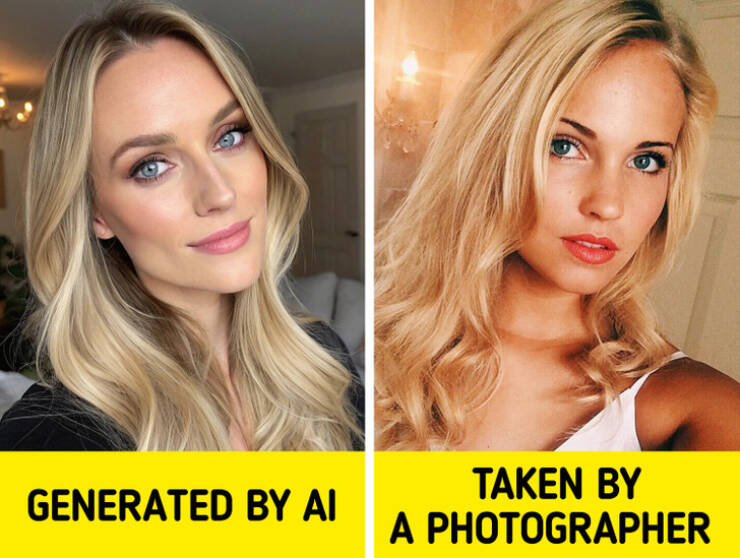
AI generates images by using all available photos on the web and their text descriptions. Although neural networks are constantly improving, a real photo can still be distinguished from a generated image by small details.
AI gets confused when generating textures and patterns.
AI often uses bright, unnatural colors when generating images. However, these colors are also found in nature, so you should not judge the authenticity of a photo based on this attribute alone.
It’s better to look closely at the textures and patterns in the photo. Neural networks sometimes get confused when drawing wool, hair or irregularly shaped spots. It also tries to give the image excessive symmetry or to blur complex transitions between different textures.
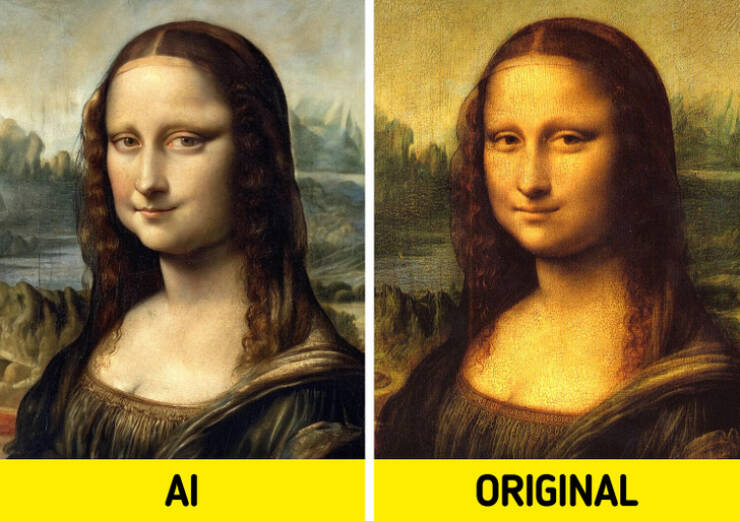
A real painting can be easily distinguished from an image created by an AI if you look closely at the surface of the canvas. Although AI does a good job at imitating strokes and copying the author’s artistic style, it can’t draw cracks in the paint and other traces of time.
Neural networks have a hard time creating backgrounds.
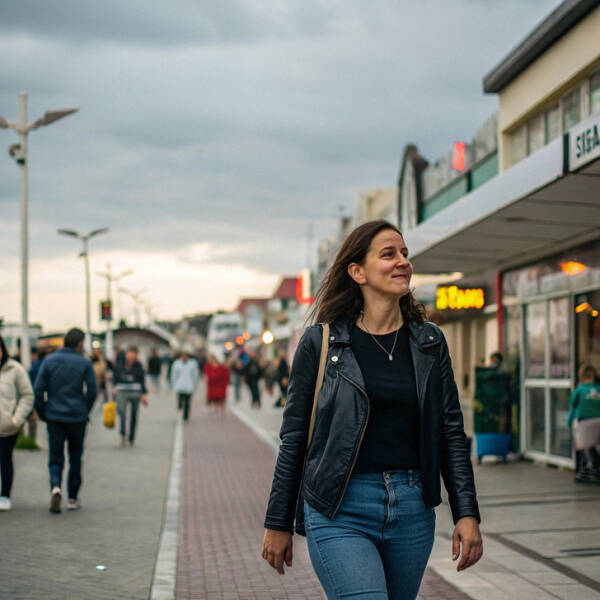
Artificial Intelligence primarily focuses on objects in the foreground, blurring the background. However, if you look closely at the figures and objects in the background, you will notice that many of them look unnatural. Usually we just don’t pay attention to this when studying the main character of the photo.
Scrutinize the text on the photo.
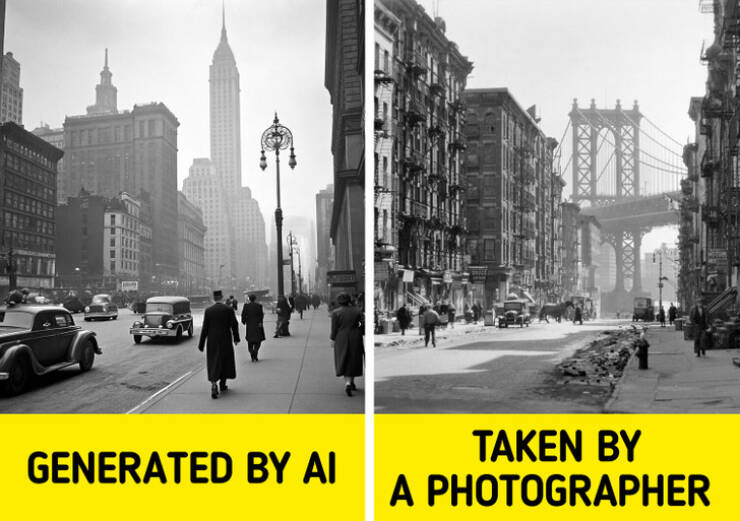
Neural networks perfectly generate not only modern images, but also old black-and-white photos. However, signs, and any text in general, are difficult for AI. Often posters and other objects with inscriptions look strange in AI-generated pictures, to put it mildly. Neural networks usually just create random sets of letters that don’t form meaningful words.
Little details give away AI-generated images.
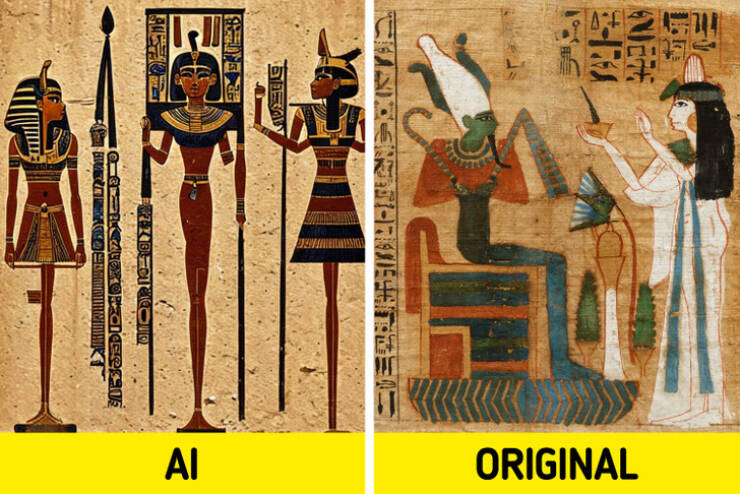
Artificial intelligence can be used to create images of historical documents and artifacts. But even though these pictures look quite authentic at first glance, they are betrayed by small details. For example, AI doesn’t always “age” exhibits and doesn’t draw creases and folds on them. In addition, some historical outfits, as well as inscriptions and hieroglyphs, may look too imaginative.
AI often uses light incorrectly.
Neural networks sometimes incorrectly place the light source or make mistakes when drawing shadows. If, after careful examination of the image, you notice that the objects in the picture cast shadows in different directions or reflections look unnatural, you are most likely looking at an AI-generated image.
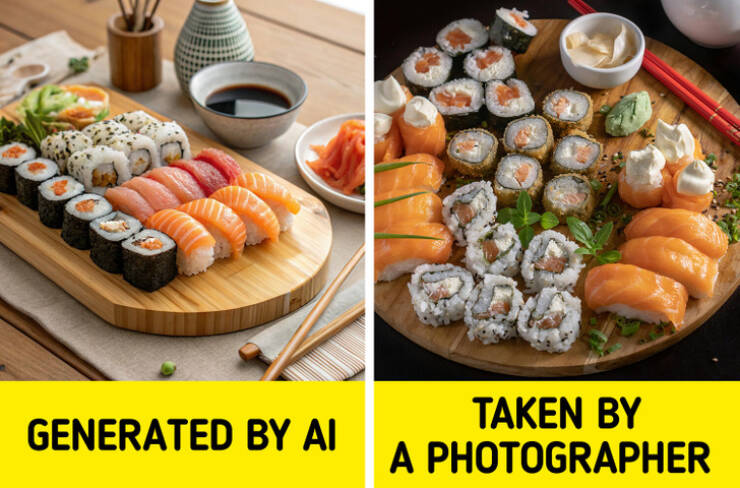
AI has already learnt to draw food so deliciously that most consumers prefer generated images to real photos. And given that neural networks tend to portray food as more calorific, researchers have already started to sound the alarm.
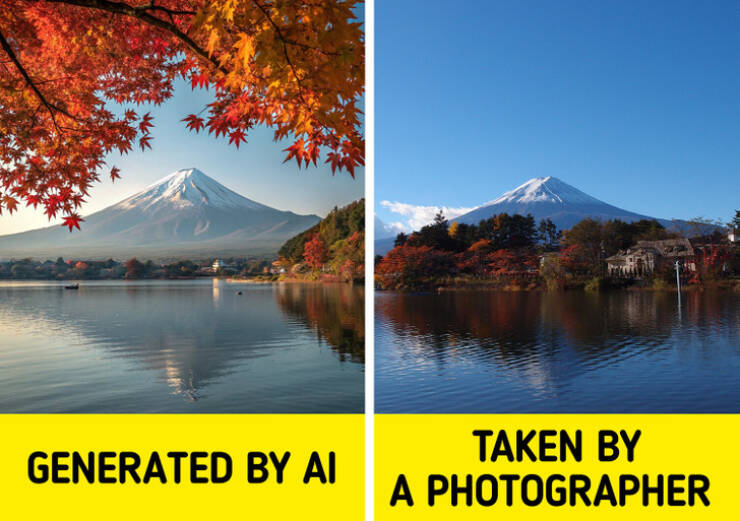
Often the footage created by AI looks too perfect. The surface of the water seems unrealistically smooth, and the leaves on the trees are strikingly bright. However, if you take a closer look, you will notice that reflections in the water follow the contours of buildings incorrectly, and the light falls on tree branches at a strange angle.
The more people in the image, the more errors there are.
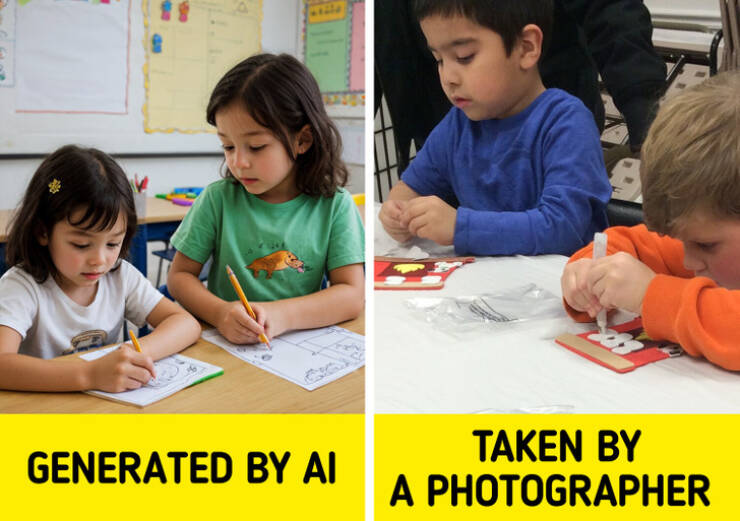
If AI copes well with the image of one character, the need to place 2 characters in the picture may confuse the program. As a result, the limbs in the created picture start to grow into each other, while accessories look strange. While generating people in the background, AI can use the same figure several times. These signs can also help to distinguish a generated picture from a real one.
AI often makes mistakes when placing objects.
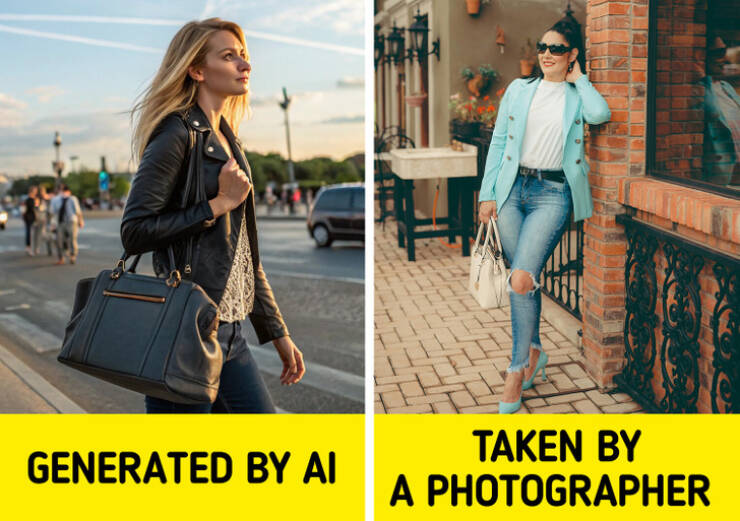
Since artificial intelligence is not familiar with the laws of physics, it can make mistakes in some details. As a result, in generated images, soft objects will look hard, hands will grow into food and cups, and bags will exist separately from the hands that carry them.





My dear readers,
I did not, I repeat...NOT, write "b#tch" Izi censored it.