"A Chicago teenager named Dorothy Jean Tillman has just become the youngest person in the world to obtain a PHD doctorate at the age of 17. - She took her first university course at the age of 10. - At the age of 14, Dorothy Jean Tillman had obtained an associate diploma, a bachelor''s degree and a master''s degree. Respect This is the kind of image that should be made viral on social networks"
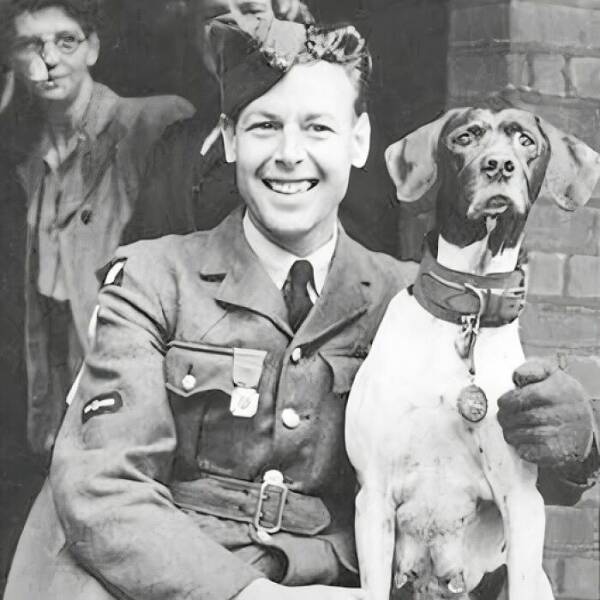
"Judy was a special pointer dog who lived on navy ships in the Pacific Ocean. In 1942, the Japanese captured her and put her in a prison camp. There she met a man named Frank Williams, who shared his small bit of rice with her even though he was very hungry too.Judy made the prisoners feel happier during the tough times. She would bark loudly when dangerous snakes, crocodiles, or even tigers came near the prisoners. When the prisoners had to go on a ship back to Singapore, Frank hid Judy in a rice sack. She stayed super quiet and didn't make a sound, so the guards never knew she was there.The very next day, their ship was hit by a torpedo! Frank pushed Judy out of a small window to try to save her. There was a big 15-foot drop to the ocean below. Frank escaped too, but was caught again and sent to a new prison camp.Frank didn't know if Judy survived. But then he heard stories about a dog helping people who were drowning after the ship sank. When Frank got to the new camp, something amazing happened. "I couldn't believe my eyes! As I walked through the gate, a scraggly dog hit me square between the shoulders and knocked me over. I'd never been so glad to see the old girl!"They spent a whole year together at the camp in Sumatra. "Judy saved my life in so many ways," said Frank. "But the greatest of all was giving me a reason to live. All I had to do was look into those weary, bloodshot eyes and ask myself: 'What would happen to her if I died?' I had to keep going."When the war ended, Frank smuggled Judy onto a ship going to Liverpool, England. In England, Judy got a special medal called the Dickin Medal, which is like a medal of honor for animals. She got it for being brave and helping prisoners stay hopeful.Frank also got an award for taking such good care of Judy. For a year after the war, Frank and Judy visited families of prisoners who had died. Frank said that Judy "always provided a comforting presence to the families."When Judy died at 13 years old, Frank spent two whole months building a beautiful stone memorial for her. It had a special plaque that told Judy's amazing life story."
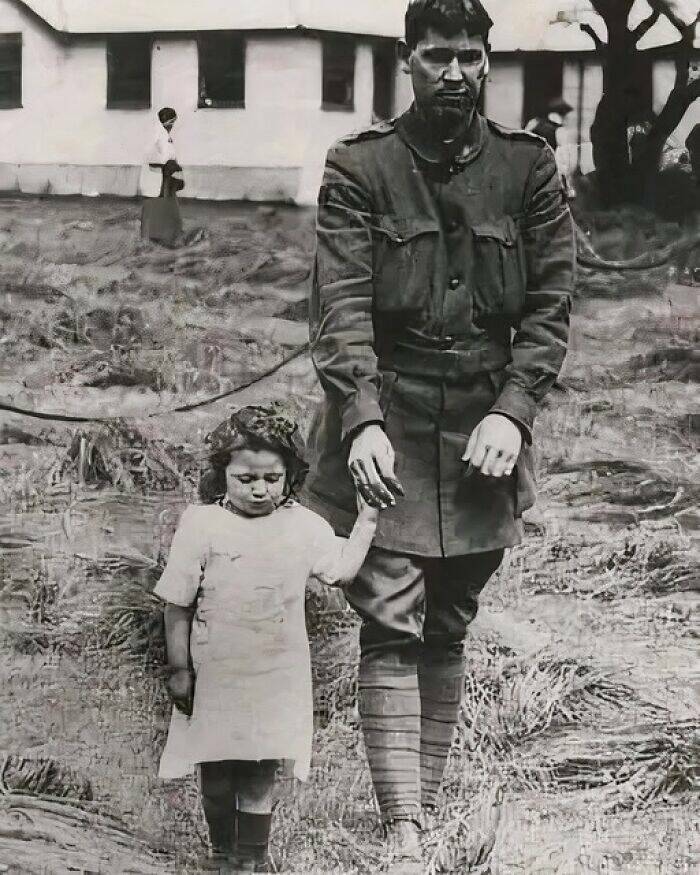
"The little girl in this photograph is Ruby Crane. From the young age of 3 years old, she spent her days at St Dunstan’s Rehabilitation Centre in Brighton, Sussex—helping blinded soldiers returning from World War I. Ruby’s father was the head gardener, and as she wandered the grounds, she would take the soldiers by the hand and guide them to their workshops, asking where they wanted to go. She knew they couldn’t see and just wanted to help. Her kindness deeply moved those around her. People sent dolls and toys to thank her for the support she gave to the men and women who had lost their sight. Ruby was so beloved that she was featured on the front page of St Dunstan’s first Annual Report (1915/1916), and later, Flag Day emblems were designed in her honor. Years later, Ruby recalled: "I always remember how my little hand seemed so small in their big hands… They were so pleased to have a child come and talk to them. It was something different—away from the monotonous grind of not being able to see things, I think." Ruby was rewarded with a long life, passing away in 2011 in her late nineties. But her legacy of kindness lives on."
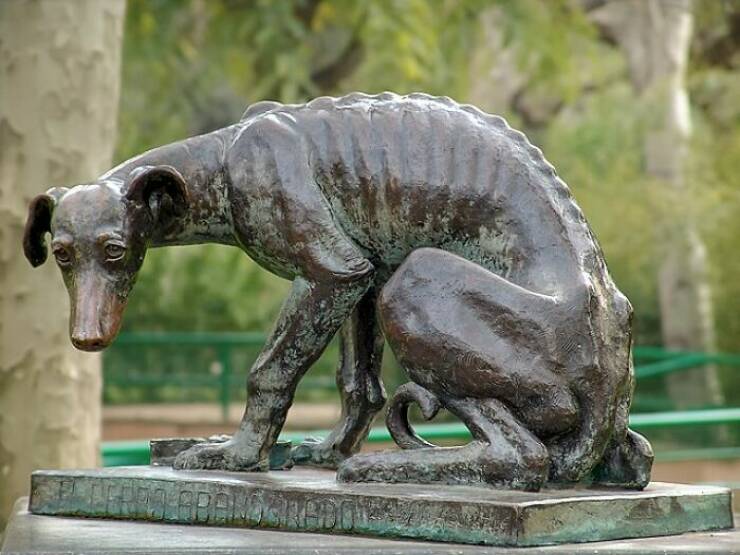
"Tucked quietly along a street in Barcelona, there stands a sculpture that stops people in their tracks.It’s called The Abandoned Dog, created by Catalan artist Artur Aldomà Puig.No pedestal. No glory. Just a dog—sculpted in stone, sitting alone, waiting.Its eyes are what pull you in.Wide. Hopeful. Full of quiet sorrow.It’s not just a statue—it’s a message.This sculpture is a tribute to every dog who gave their love, only to be left behind. It speaks for the voiceless. The loyal. The forgotten.Next to the figure is a poem by the artist himself, etched in metal.It reads:“Your race doesn’t matter.Your name doesn’t matter.You came into the worldto be my friend.”It’s not just about dogs. It’s about what we owe to love—the love that comes without judgment, without condition, without limit.Locals leave flowers by its paws. Children stop to pet it. Visitors kneel to take photos and wipe away tears. It has become a place of memory, and mourning, and quiet promises.A reminder that loyalty like this should never go unnoticed.Artur Aldomà Puig didn’t just sculpt a dog.He sculpted a responsibility."
"Passengers flying first class on British Airways’ Boeing 747s have expressed concerns about a redesign that includes windows in some lavatories. One woman traveling to New York voiced her discomfort over the lack of blinds. A stewardess reportedly responded, “Madam, if someone is clinging to the side of this aircraft at 35,000 feet, they’ve earned the view.''
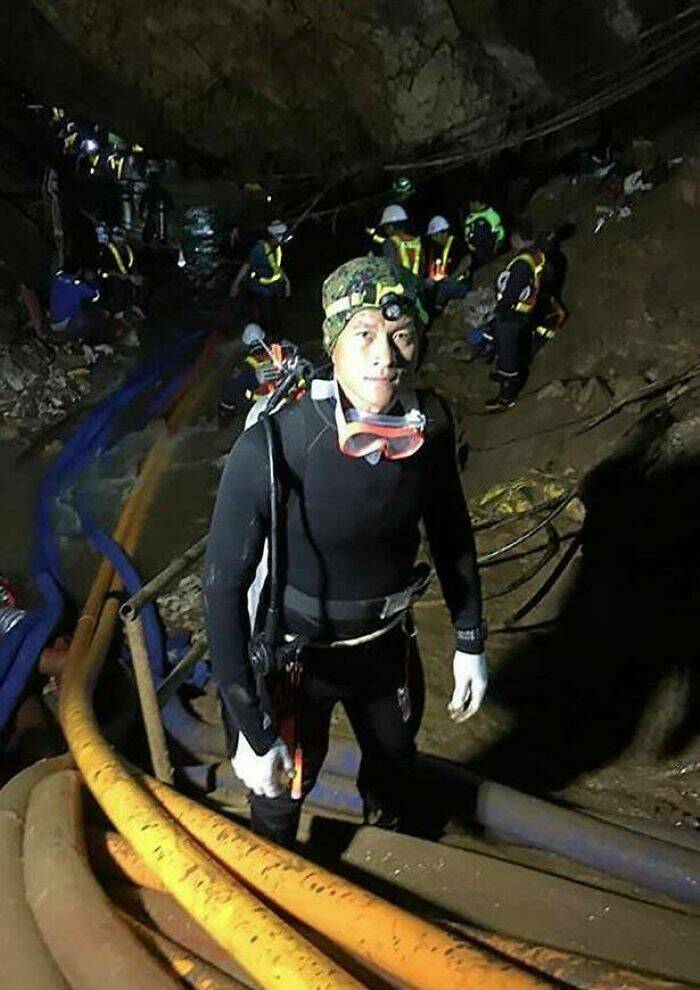
"This is the final photo of Saman Kunan, a 38-year-old former Thai Navy SEAL who gave his life during the daring rescue of twelve boys trapped in a flooded cave in Thailand.When he learned the boys were running low on oxygen, he made the ultimate choice—leaving his own supply behind to give them a better chance at survival, and setting out to bring more. Tragically, he never made it back.His bravery and sacrifice helped pave the way for the boys’ eventual rescue—and he is remembered as a true hero.Our salute to him"
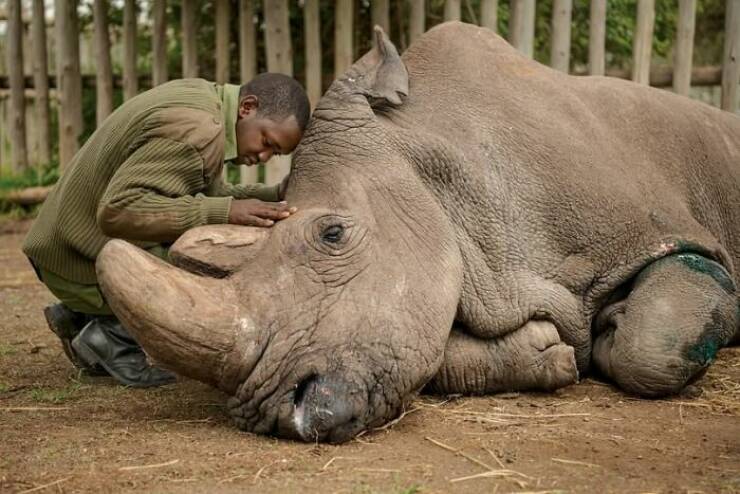
"Saying goodbye to a subspecies, the very last male Northern White Rhino.It survived 55 million years & saw ice ages, earthquakes, meteor strikes & was a testament to innumerable historical changes on the planet. It could not survive humans.The great beast is now functionally extinct."
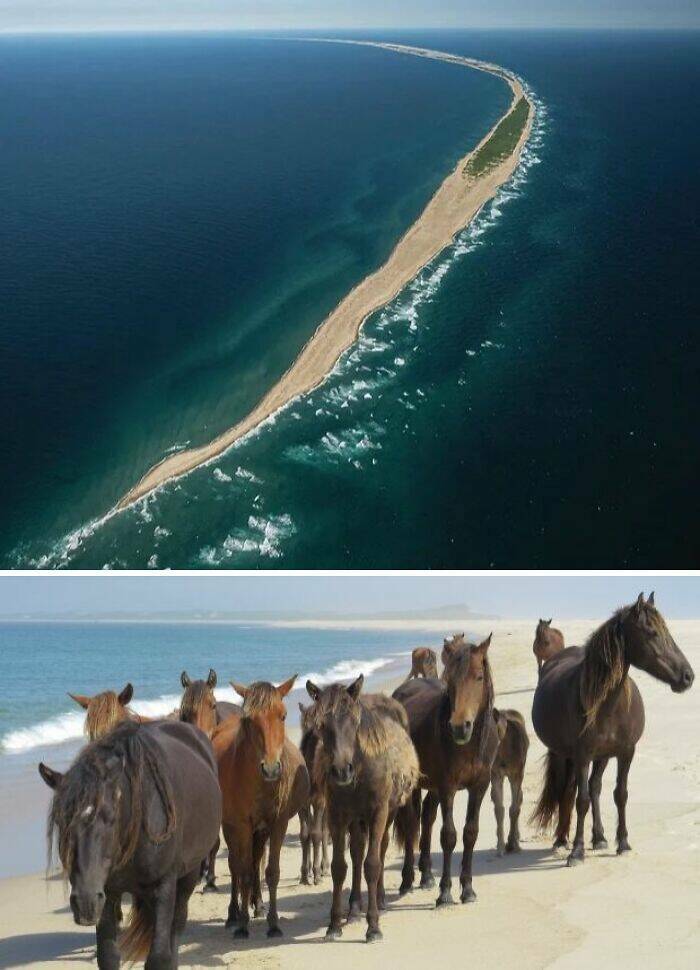
"Did you know Sable Island is a narrow, remote sand island located in the Atlantic Ocean, off the coast of Nova Scotia, Canada. Known for its crescent-moon shape, the island is famous for its population of wild horses, which live freely, and its unique ecosystem, which includes various bird species and plants adapted to its windy and arid climate. It's also recognized for its history as a big-movie “cemetery of shipwrecks,” due to the shallow sandbanks surrounding it. Currently, it is a protected nature reserve and an environmental research site.A fun fact about Sable Island is that it has more wild horses than human inhabitants. These horses, descendants of animals brought in the 18th century, survive in complete freedom and have adapted to the extreme surroundings of the island."
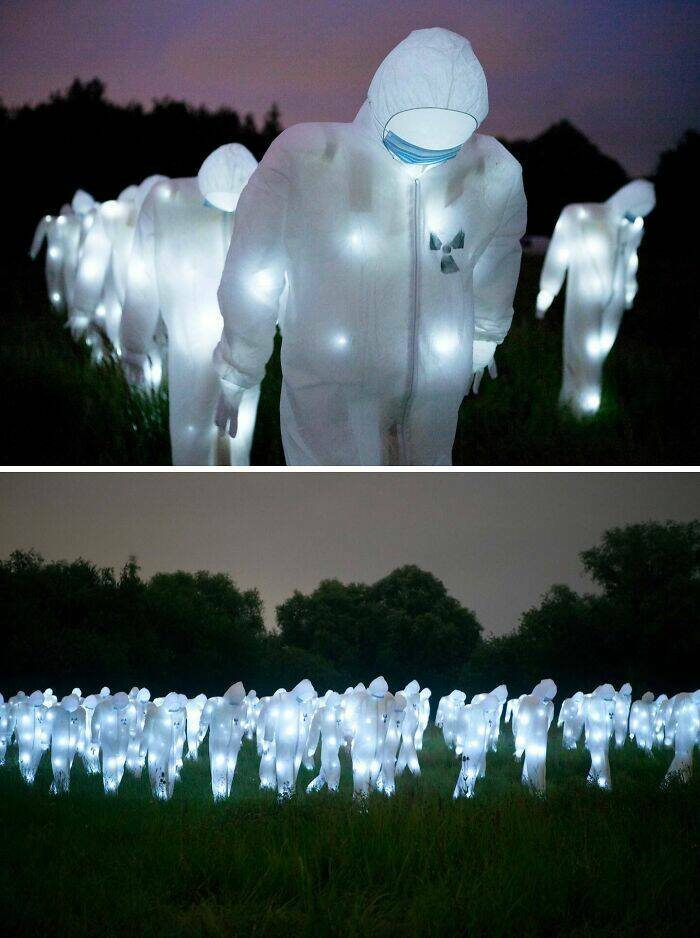
"After the devastating earthquake and tsunami in 2011, when the Fukushima nuclear power plant was on the verge of collapse, a small group of people stepped forward – not soldiers, not politicians, but courageous technicians, engineers, and scientists. Many of them were already retired. They volunteered to stay where few wanted to stay: inside the danger.With destroyed cooling systems and radiation levels thousands of times higher than the legal limit, these men and women risked their lives to prevent the worst. They became known worldwide as the "Fukushima 50."Equipped with protective suits, they took on tasks no machine could do – pumping seawater into overheated reactors and working amidst the rubble. They knew what was at stake: not just their health, but the fate of an entire country.What they did was not heroism in the traditional sense. It was quiet courage, deep responsibility, and the will not to look away in the darkest hour. Many of them didn't want recognition—only the hope that their efforts would save lives and prevent the unimaginable. Their courage will never be forgotten."
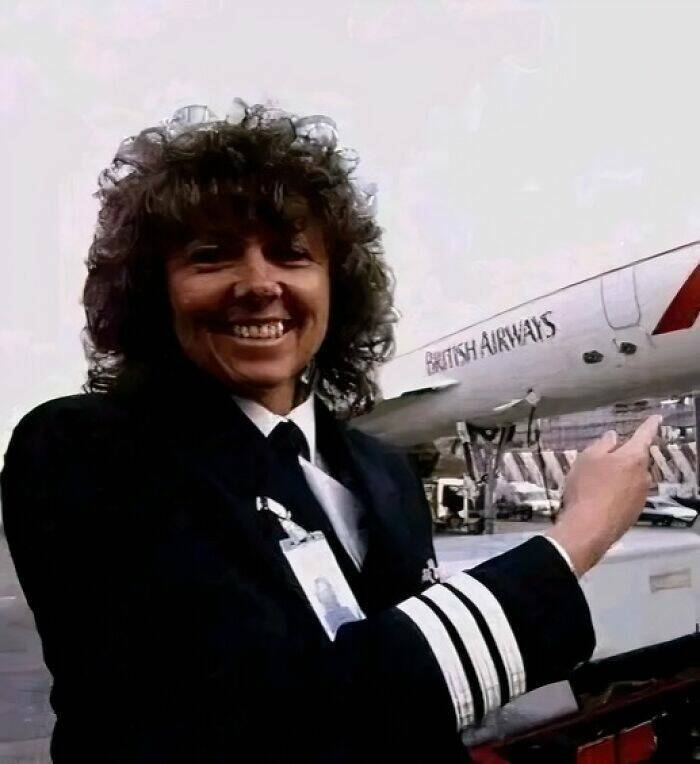
"Barbara Harmer left school at 15 without any qualifications and started working as a hairdresser. After five years of styling hair, she decided to apply to become a trainee air traffic controller at London Gatwick Airport. While at Gatwick, she also chose to study for her A levels, aiming to pursue law, focusing on Geography, English Law, and Constitutional Law. However, she later switched gears and began taking flying lessons after getting a £10,000 bank loan.Once she earned her private pilot license, she started a two-year distance learning course for her commercial pilot license, which she achieved in 1982. Even after that, her determination was really put to the test when she faced rejection from potential employers. She sent out 100 applications for pilot jobs, and all of them were turned down.In 1984, after two years on the tarmac, she landed her first pilot job with a small commuter airline. That same year, fortune smiled upon her when she joined British Caledonian Airlines. Things got even better for her in 1987 when British Caledonian Airlines merged with British Airways. She kept flying high, and after four years flying British Airways' DC-10, she was chosen to train as a Concorde pilot, making her the first woman qualified to fly the supersonic aircraft.By the time Concorde was retired in October 2003, Harmer had spent 10 years as a pilot for regular scheduled services. After Concorde, she transitioned to flying the Boeing 777 Jumbo jet until she voluntarily retired in 2009 to explore new adventures. She had plans to sail her yacht across the Atlantic in 2013, something she was already preparing for.Sadly, unbeknownst to her, she had developed ovarian cancer, which was slowly taking a toll on her health. By the time it was diagnosed, she had just over a year to live. Captain Harmer, who never had children, passed away in 2011 at the age of 57, leaving behind her husband of 27 years. Her ashes were flown high and scattered over the sea near her home.Starting from humble beginnings, she climbed to incredible heights. Her legacy continues to inspire women and young people everywhere. With her practical, can-do attitude, she achieved remarkable success in a male-dominated field."
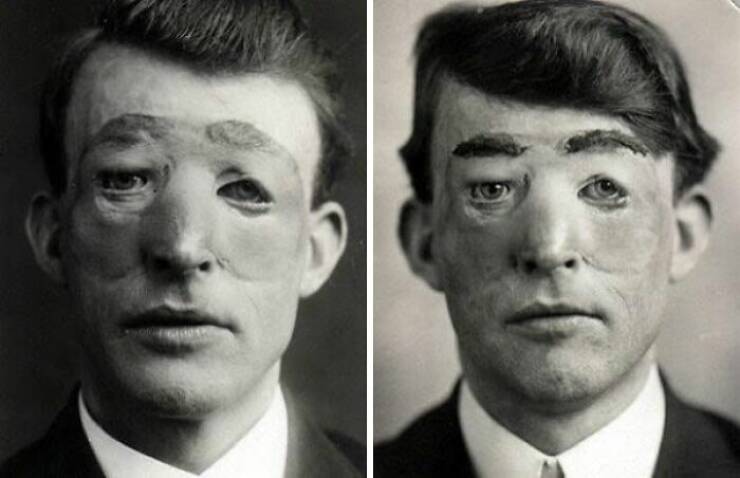
"Walter Yeo, a sailor in the Royal Navy, became one of the first individuals to undergo advanced plastic surgery after suffering devastating injuries during the 1916 Battle of Jutland. Aboard HMS *Warspite*, Yeo sustained trauma so severe it left him without eyelids, rendering his eyes painfully exposed. His case became a landmark in medical history when he was treated in 1917 by Harold Gillies, a pioneering surgeon who would come to be known as the father of modern plastic surgery.Gillies introduced revolutionary techniques in facial reconstruction, using a method called the “tubed pedicle” skin graft. This involved transferring living tissue from undamaged parts of the body to the wounded area—a process that was painstaking and experimental at the time. For Yeo, this meant a reconstructed face using one of the first full-thickness skin transplants ever attempted, a medical breakthrough that pushed the boundaries of what was possible in reconstructive care.Though rudimentary by today’s standards, Yeo’s surgery represented a leap forward in healing the physical and emotional wounds of war. His recovery offered a glimpse of hope to thousands of soldiers disfigured in combat and helped establish Queen’s Hospital in Sidcup as a center for innovation in reconstructive surgery. Walter Yeo’s journey stands as a powerful symbol of human endurance and the transformative potential of medicine in restoring not just appearance, but identity and dignity."
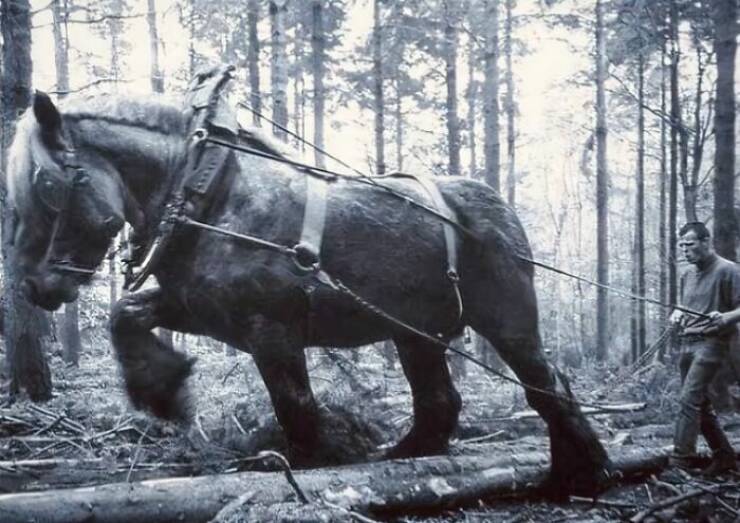
"1846 Sampson was born on a farm in Toddington Mills, Bedfordshire, England. Shire horses are known for their size and strength, but Sampson would go on to surpass even the most impressive specimens of his breed. From the outset, he showed the potential to be something extraordinary. His massive frame and gentle demeanor would earn him a place in history as one of the most famous horses in the world.Sampson, later known as “Mammoth,” grew to a staggering height of 21.2½ hands, making him the tallest horse ever recorded. His size was not just a matter of height, but also sheer mass—he weighed a staggering 3,359 pounds. Despite his immense size, Sampson was known for his docile and friendly nature, a characteristic that endeared him to those who knew him. His temperament was in stark contrast to his imposing presence, and he became a symbol of the strength and grace of Shire horses.At the height of his fame, Sampson's extraordinary size captured the attention of the world, and he was widely recognized as the largest horse ever recorded. His impressive measurements and gentle personality made him a beloved figure, not only in the world of farming but also among the public. Sampson's legacy lives on as a testament to the incredible power and beauty of Shire horses, marking him as a true giant in the history of equine breeds."







It is common usage in English to refer to it as a baby, even in utero. Just ask your mother. But you do bring up an important question, when is it a baby? Dont say "at birth", my son's best friend was born at 28 weeks in an emergency c section because of a car accident. He is a good kid and no less of a person because he wasn't born at 40 weeks.
Sheldon Cooper companion.
#42 *drown